Apple Glasses
Apple Glasses was a concept render from early 2015, built around a batch of patent filings Apple had quietly published over the previous year. The patents described a head-mounted optical system with transparent displays — enough to sketch out what the hardware might look like.
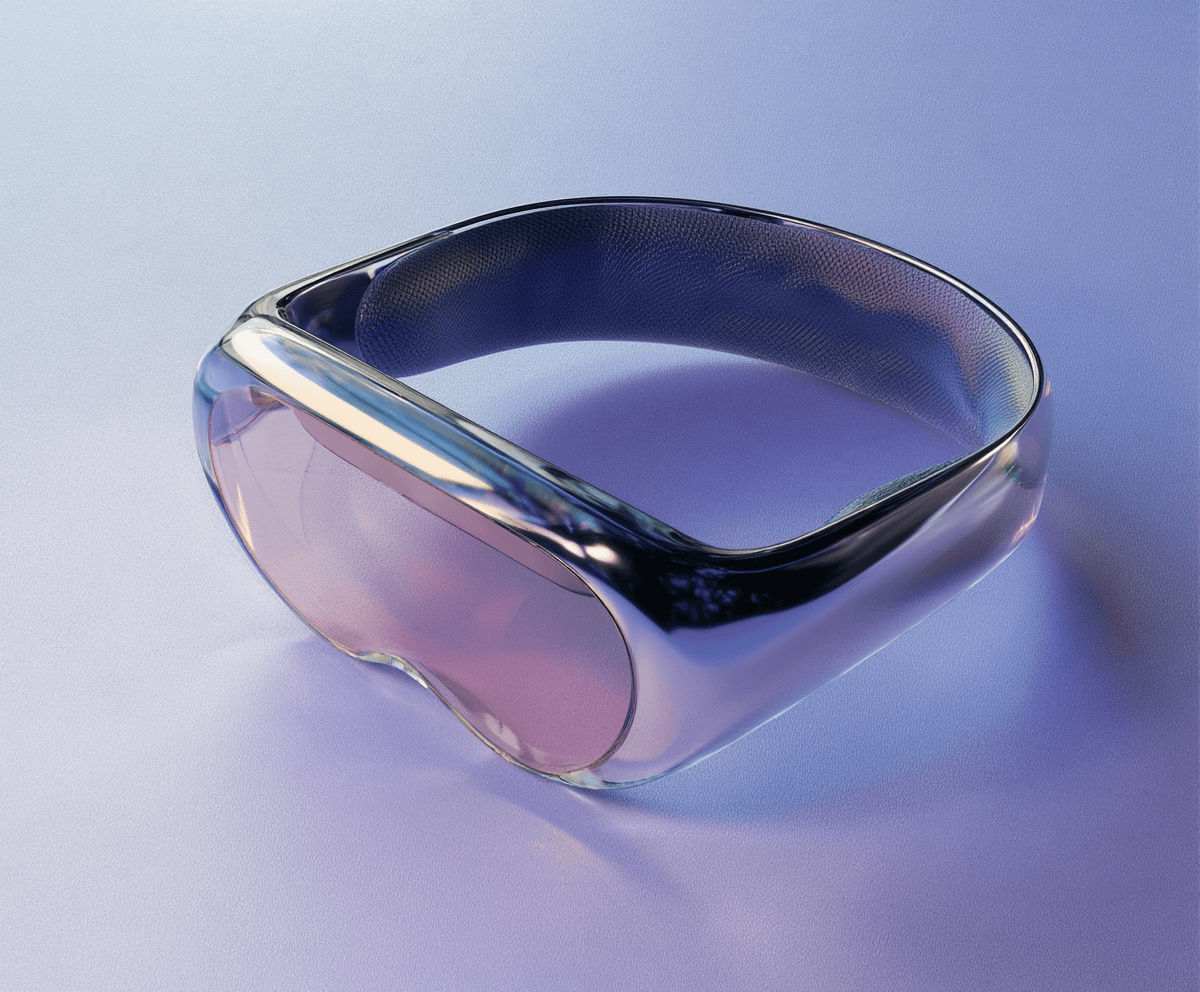
In 2015, Apple had just shipped the Apple Watch and was deep into what looked like a serious wearables push. The question at the time was whether a display worn on the face was the logical next step — and if so, what form it might take. Google Glass had been out for a couple of years and hadn't worked out, which made the category interesting rather than settled.
The patents Apple filed described a system where the optical display was embedded in a conventional eyeglass frame, with the processing done by a paired iPhone rather than on-device. That tethered model made more sense in 2015 than it would a few years later — LTE on the Watch hadn't arrived yet, and the assumption was that anything Apple put on your face would talk to your phone.
What the render tried to work out
The main design challenge was the lens. Transparent displays in 2015 were either very dim or very thick, and Apple's design language at the time — the thin aluminum and glass of the iPhone 6, the ceramic and sapphire of the Watch — didn't leave much room for visible hardware. The render took a conservative read: conventional acetate frames, minimal visible electronics, a small earpiece for audio feedback.
The concept attracted coverage from several tech blogs at the time. Most of the interest was in whether the form factor was viable at all, rather than whether the specific design was accurate — which was probably the right frame for a 2015 render of a product that didn't exist yet.
In retrospect
Apple didn't announce anything in the glasses category in 2015 or for several years after. The Vision Pro, when it finally arrived in 2023, took a completely different form factor — a ski-goggle-style headset rather than glasses — and solved the display problem with micro-OLED rather than transparent optics. The tethered model never materialized; the device is fully standalone.
Covered by
- 9to5Mac
- MacRumors
- Cult of Mac